
Before I change prompts, add LoRAs, or declare a workflow stable, I run a baseline: one fixed prompt, ten seeds, same sampler settings, logged end to end. This post is that baseline for MiniMax H3 Turbo as I currently use it in the kitchen.
The goal is not to find the prettiest image. The goal is to see the distribution.
I run this style of baseline whenever I need to trust a claim about MiniMax H3 Turbo itself rather than about a particular lucky seed. It is slower than demo culture and faster than arguing from memory.
The Protocol
Single positive prompt, locked text
No LoRA
Ten predetermined seeds
Identical sampler, steps, and guidance where the stack exposes them
Same resolution
Full experiment log completed before review
I deliberately avoid cherry-picking. All ten outputs are kept, even the weak ones.
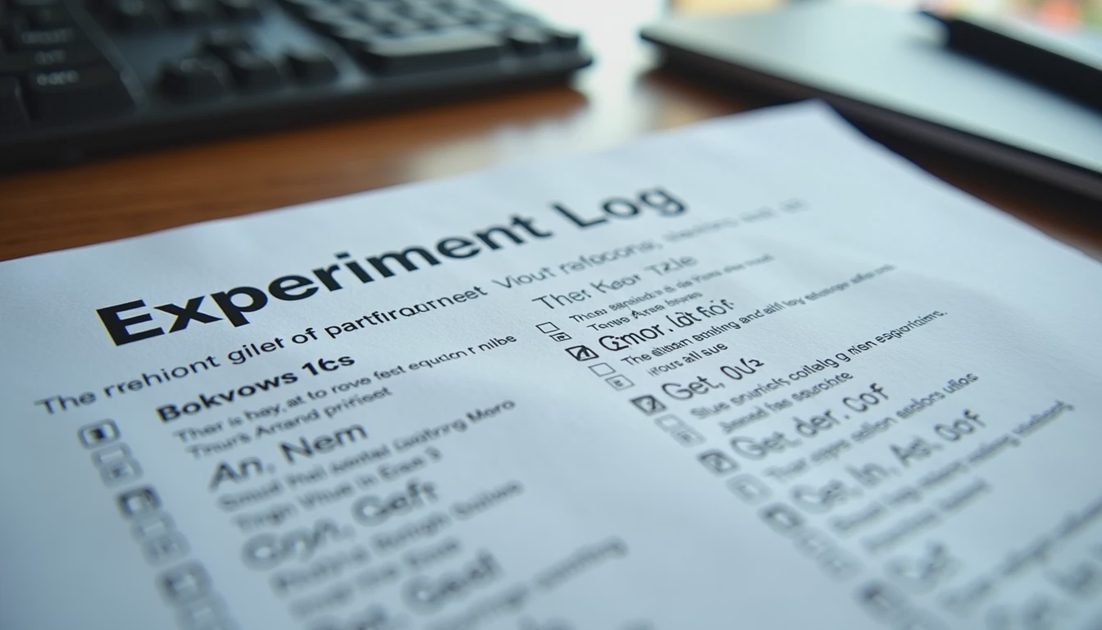
What I Look For in the Ten Runs
Prompt fidelity — Did each run include the required objects and attributes?
Composition drift — How much do framing and layout swing?
Identity-like stability — For character-ish prompts, do facial or body traits hold a family resemblance?
Detail failures — Hands, edges, small props, text-like shapes
Outliers — Runs that are unusually strong or unusually broken
A baseline is healthy when most runs are usable and failures are understandable. A baseline is concerning when only one or two runs look intentional.
Seed group | Observed pattern | Note |
|---|---|---|
1–3 | Stable framing, minor attribute drift | Acceptable band |
4–6 | Larger pose variation | Still on-prompt |
7–8 | Detail collapse on extremities | Known soft spot |
9–10 | One strong outlier, one weak | Distribution reminder |

Why Ten Runs Instead of Three
Three runs can lie. They can all land in a lucky band or all miss the same constraint by chance. Ten is not statistically holy, but it is enough to see a pattern without turning every test into a research project. When I need more confidence, I double the set. When I am only probing, I sometimes use five. For published baselines, I stay at ten.
How This Baseline Informs Later Work
Later H3 Bench posts change one variable at a time: prompt structure, length, or sampler-related settings. The baseline is the control. Without it, every new result is a floating anecdote.
The baseline also sets expectations for LoRA work. If the base model already swings hard on identity cues, a LoRA will be asked to stabilize something unstable. That is useful to know before training.
Result / What Worked / What Failed / Would I Use It Again?
Result: MiniMax H3 Turbo produced a usable majority of on-prompt images with visible drift in pose and fine detail.
What Worked: Core object presence and overall style coherence across most seeds.
What Failed: Extremity detail and occasional framing jumps.
Would I Use It Again? Yes, as a control for further tests—not as a finished creative recipe.
Run the test. Save the settings. Show the failure.
A baseline is not glamorous. It is the reason the glamorous runs later can be trusted—or safely discarded.
I revisit the same baseline when the host software updates or when a new MiniMax H3 Turbo version appears in my stack. If the distribution shifts, that shift becomes part of the story before I blame a LoRA or a prompt idea. Baselines expire; the habit of taking them does not.
For creative teams, a shared baseline also reduces argument. Instead of debating taste on a single hero frame, you can point to how often the stack delivers the required constraints. That conversation is calmer and more productive.
If your first ten-run baseline looks chaotic, do not immediately add a LoRA to “fix” it. First decide whether the prompt is asking for something the base model can support. Sometimes the right next step is a clearer prompt, not a heavier adapter.
Practical Notes for Replicating the Test
If you replicate this on your stack, lock every field you can. Where the host hides sampler details, note that limitation in the log. Where seeds are not fully exposed, record whatever identifier the UI provides. The point is comparability on your machine, not perfect parity with mine.
I also recommend saving the ten outputs in a single contact sheet plus individual files. The contact sheet trains your eye on distribution. The individual files support later side-by-side diagnosis when a LoRA or prompt change is introduced.
Finally, resist the urge to rerun only the weak seeds until they look better. That habit converts a baseline into a highlight reel. If you need better weak-seed performance, change a variable on purpose and log it as a new experiment.
The baseline in this post is a control, not a trophy. When later posts claim that a structured prompt or a LoRA improved consistency, they mean improved relative to a measured baseline like this one. Without that anchor, improvement is storytelling.
I also store the baseline contact sheet in the same experiment folder as the log. Six months later, the sheet answers questions faster than my memory does. That is the practical definition of a useful baseline: it still works when you are no longer excited about the test. Keep the sheet.
No comments yet.