
"Best quality" is a feeling. Feelings matter in creative work. They are not a complete test result.
When someone says a MiniMax H3 Turbo setup is best quality, I need to know: best compared with what, across how many seeds, under which constraints, and at what cost. Without those anchors, "best" is a mood board caption.
The Problem With Unanchored Quality Claims
Unanchored claims spread quickly because they are easy to post. A single stunning frame plus the words "best quality settings" travels farther than a table of failure rates. The cost shows up later when followers cannot reproduce the look or when the look collapses outside a narrow prompt family.
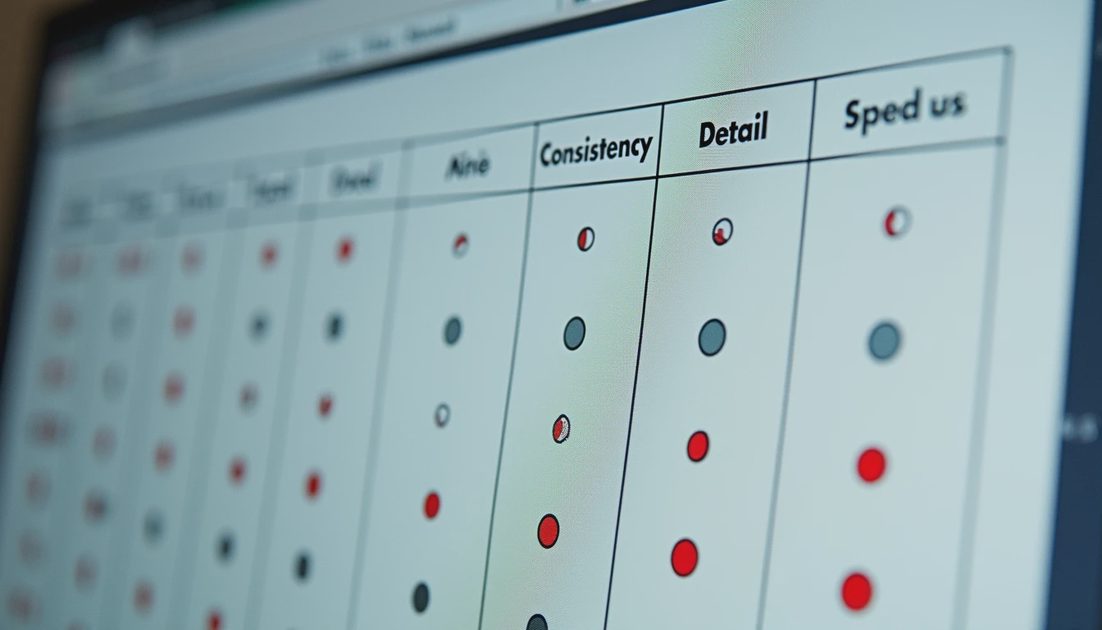
In the kitchen I treat quality as multi-dimensional:
Prompt fidelity
Consistency across seeds
Detail stability
Speed and cost
Suitability for the intended use
A result can score high on beauty and low on consistency. Both scores should be visible.
What I Write Instead of "Best"
I try to write statements like:
Higher fidelity on constrained props than the prior baseline
Better hand stability at the cost of longer runtime
Stronger style match with reduced prompt flexibility
Those sentences are less marketable. They are more reusable.
Claim type | Example | Problem |
|---|---|---|
Unanchored | Best quality H3 Turbo settings | No comparison, no failure data |
Anchored | Better prop fidelity than baseline B2 across 10 seeds | Contestable and useful |
Trade-off | Sharper detail, 30% slower | Decision-ready |
How This Changes Evaluation
Before I keep a workflow, I ask:
What did it beat?
Where does it still fail?
What does it cost?
Would I run it on Monday under time pressure?
If I cannot answer, I do not call it best. I call it promising or incomplete.
Field Note From Client Work
In consulting work I have seen teams adopt a "best" preset that was never measured against their real constraints—brand colors, product accuracy, turnaround time. The preset produced lovely general images and expensive revisions. Anchored evaluation would have caught the mismatch earlier.
Practical Replacement Habit
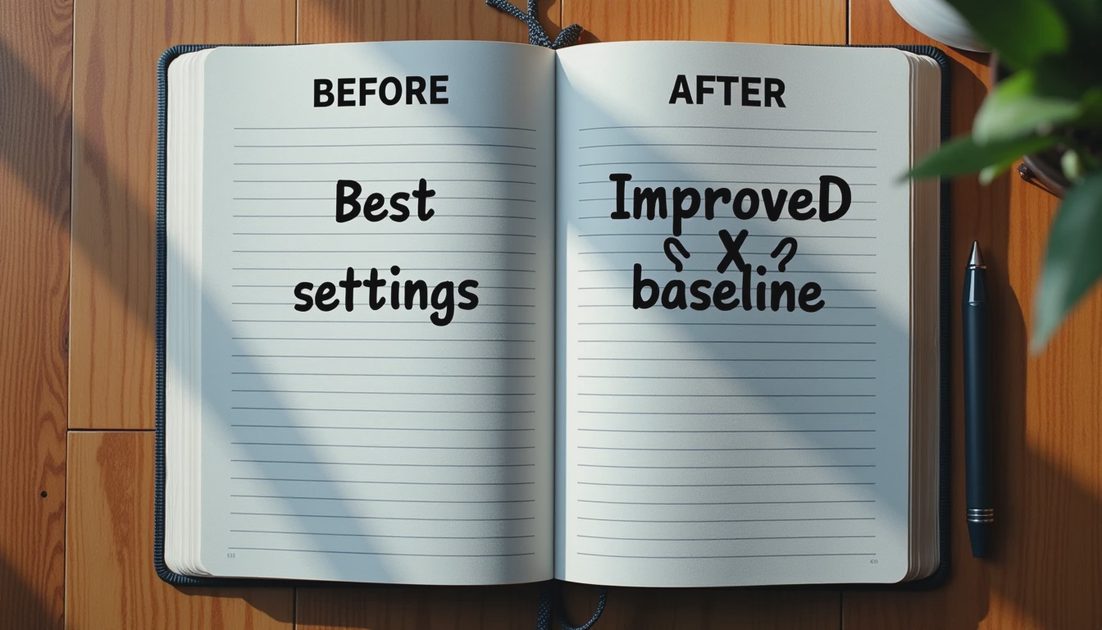
Replace the sentence "These are the best settings" with "These settings improved X relative to Y, failed on Z, and cost W." The second sentence is harder to write and harder to fake.
Run the test. Save the settings. Show the failure.
"Best quality" can still appear in casual speech. In the log, it needs receipts.
Why Creators Reach for "Best"
The word promises relief. It suggests the search is over. In a landscape of endless settings, relief is attractive. The danger is that relief arrives before measurement.
I still feel the pull. When a grid contains one frame that makes me stop scrolling, I want to crown it. The discipline is to run the rest of the seeds anyway and write down what the crown does not survive.
Linking Quality Language to the H3 Bench
The H3 Bench measurements exist partly to starve empty quality claims of oxygen. If a post on this site says a configuration improved detail stability, that claim should point to a logged comparison. If it cannot, the post is not ready.
This is slower content culture. It is also why the kitchen can disagree with itself productively. A later test can beat an earlier one on the same metrics without anyone needing to defend a permanent "best."
A Short Script for Reviewing Someone Else's "Best" Preset
Ask for the exact model version and prompt text.
Ask how many seeds were kept, not just shown.
Ask what failed.
Ask about runtime or cost.
Run a small probe on your own machine before adopting anything.
If those answers are unavailable, treat the preset as inspiration, not infrastructure.
Run the test. Save the settings. Show the failure. "Best quality" is optional marketing language. Anchored evaluation is the working language of this site.
Field notes exist to catch cultural habits that quietly damage technical work. Unanchored "best" language is one of those habits. It survives because it flatters the poster and asks little of the reader. The kitchen asks more of both.
When in doubt, demote "best" to "best so far on metric M against baseline B." The demotion is not false humility. It is version control for judgment.
If you adopt only one habit from this note, make it the four-question gate before keeping a workflow: what did it beat, where does it fail, what does it cost, and would you run it under time pressure. That gate eliminates most costume "best" claims without requiring a laboratory personality.
The next time a screenshot promises best quality settings for MiniMax H3 Turbo, treat it as a hypothesis. Run it through the gate. Keep what survives. Archive the rest without drama.
That is the whole argument. Quality is real. Unmeasured supremacy is not. Keep the first. Retire the second from your logs and from your recommendations.
Future posts will keep using comparative language even when a result looks exciting. Excitement can stay in the prose. Certainty has to earn its place in the table.
Run the test. Save the settings. Show the failure. Then decide whether the word best still deserves ink in the log today at all.
No comments yet.