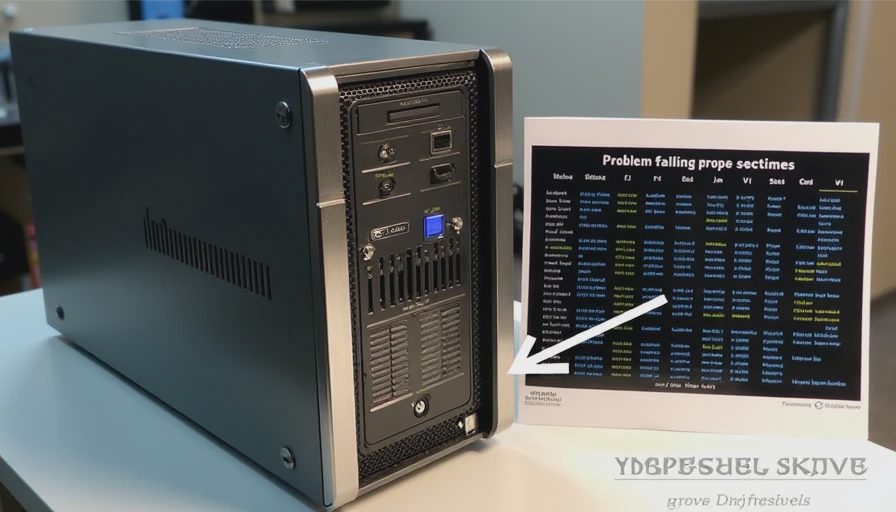
I bought the faster workstation because the old one felt like the bottleneck. Probe sets that should have taken an hour were stretching into three. Strength sweeps were being postponed because they were too expensive in wall-clock time. The new machine arrived on a Thursday. By the following Wednesday the usable output had not improved. The failures were simply arriving faster.
This is the failure file for that upgrade.
The symptom that looked like a hardware limit was slow iteration. What the faster machine actually revealed was an overfit character LoRA, prompt blocks that leaked identity language into the scene description, and three shared recipes that had never been re-probed after a quiet model update two weeks earlier. None of those problems required more compute. All of them required the measurement habits that should have been in place before the purchase order was signed.
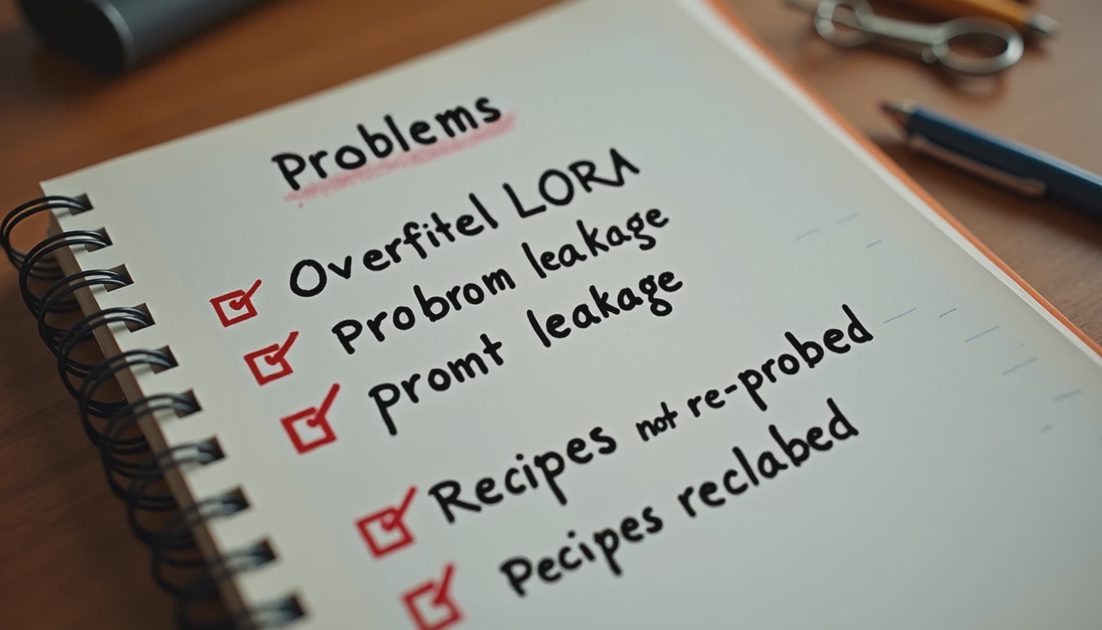
Within the first week the new host made three problems impossible to ignore. The overfit LoRA that had been “good enough” under slow iteration now failed half the out-of-distribution probes in the time it previously took to generate one grid. Prompt blocks that contained leaked identity phrases produced consistent drift that had been masked by the old machine’s slow feedback loop. Several shared recipes generated clean-looking but wrong results at a speed that left no time for rationalization.
I spent the second week fixing the recipes instead of celebrating the hardware. The LoRA was cleaned and retrained with an earlier stop. The prompt blocks were rewritten so that identity language lived only in the identity block. Every active card was re-probed under the new host and the results logged. Only after those changes did the faster machine become useful. Larger probe sets could run overnight. Multiple strength sweeps could finish in a single work session. The upgrade finally paid for itself—but only after the workflow problems were solved.
The lesson I now apply before any upgrade is a single written question: “What specific failure mode will become cheaper to measure or fix with more speed?” If the answer is only “everything will be faster,” the upgrade is postponed until the failure modes are named and the current recipes are measured against them. Faster hardware is wonderful when the recipe is already sound. It is expensive theater when the recipe is the actual problem.
I still use the upgraded workstation every day. It is a good machine. The lesson was never “hardware is useless.” The lesson was that hardware cannot diagnose or repair a workflow that has not been measured. Once measurement exists, better hardware becomes a multiplier instead of a distraction.
A simple pre-purchase checklist now lives on the wall:
List the current top three failure modes with their probe pass rates.
Write one sentence for each: “Faster hardware will help this mode by ___.”
If the sentences are vague, stop and improve measurement first.
Only after the sentences are concrete, compare the cost of the upgrade against the expected reduction in time spent on those modes.
The checklist has killed more impulsive purchases than any budget review. Teams that already have clean logs almost always make better hardware decisions because they can predict exactly which bottleneck the new machine will relieve.
Run the test. Save the settings. Show the failure. Better hardware cannot rescue a workflow that was never measured.
Speed makes broken recipes feel worse because it removes the psychological buffer. A slow machine gives the operator time to rationalize a bad result—“maybe the next seed will be better.” A fast machine removes that buffer. The same broken recipe now produces a full probe set of failures before the coffee is finished. That emotional pressure is useful if the team responds by fixing the recipe; it is demoralizing if the team responds by blaming the new hardware. The correct response is always the former.
What I tell teams considering an upgrade is simple. Bring the current probe-pass rates and the list of known failure modes to the purchasing conversation. If those numbers and lists do not exist, the first investment should be measurement discipline, not a new GPU. Teams that already have clean logs almost always make better hardware decisions because they can predict exactly which bottleneck the new machine will relieve. Teams that do not have clean logs usually discover, after the purchase, that the bottleneck was never the machine.
The positive side of the upgrade, once the recipes were fixed, was real. Overnight probe sets became practical. Strength sweeps that used to be postponed became routine. The machine finally did what I had hoped it would do on the day it arrived. The difference was the two weeks of recipe work that happened in between. Skipping that work would have left me with a faster way to generate the same failures.
Hardware amplifies whatever system you already have. The only reliable way to make an upgrade pay for itself is to measure the system first, name the failure modes, and fix the recipes that are actually limiting output. Everything else is just a more expensive way to wait for the same problems to appear.
Looking back, the most useful outcome of the upgrade was not the extra speed. It was the forced confrontation with recipes that had been allowed to coast under the old machine’s slow feedback loop. The new host simply made the existing problems impossible to ignore. In that sense the purchase succeeded, just not in the way I had expected when I signed the order. The lesson I carry forward is to treat any future hardware decision as a measurement decision first and a performance decision second.
No comments yet.